
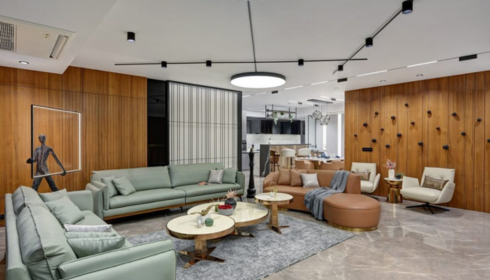

There’s something exciting about starting with a blank canvas.
A new home—fresh walls, untouched floors, endless possibilities. It feels like a chance to get everything right this time. No awkward layouts to work around, no compromises you’ve learned to live with.
But here’s the thing no one really tells you… the freedom can be overwhelming too.
Because when everything is possible, where do you even begin?
The Early Decisions That Matter More Than You Think
At first, most people focus on the big picture.
Room sizes, layouts, maybe the exterior look of the house. Those are important, of course. But it’s often the smaller, quieter decisions that end up shaping your daily experience the most.
Things like how light enters a room. Where switches are placed. How spaces connect to each other.
That’s where new build interiors really come into focus—not as an afterthought, but as a core part of how the home is designed from the ground up.
Because once the walls go up, changing these details becomes a lot harder.
When Choices Start to Pile Up
If you’ve ever gone through the process of building a home, you’ll know this moment well.
Suddenly, you’re faced with decision after decision.
Tiles. Flooring. Cabinet finishes. Paint colors. Fixtures.
Individually, they don’t seem like a big deal. But together, they can feel overwhelming—like you’re trying to piece together a puzzle without seeing the full picture.
This is where thoughtful finish selections become essential. It’s not just about choosing what looks good in isolation. It’s about understanding how everything will work together once it’s all in place.
Because a home isn’t experienced in pieces—it’s experienced as a whole.
The Things You Don’t Notice… Until You Do
Some of the most important design decisions are the ones you don’t immediately notice.
Until something feels off.
Maybe a light switch is awkwardly placed. Maybe there aren’t enough outlets where you need them. Maybe the lighting doesn’t quite match how you use the space.
These are small things, but they affect your daily life in surprisingly big ways.
That’s why planning electrical layouts and specifications is so important early on. It’s not just about functionality—it’s about convenience, comfort, and making sure your home supports your routines without friction.
When it’s done right, you don’t think about it.
When it’s not… you think about it every single day.
Designing for Real Life, Not Just for Looks
It’s easy to get caught up in how a home will look.
The aesthetic matters, of course. But a beautiful home that doesn’t function well can quickly become frustrating.
Real design considers how you live.
Do you need more storage in the kitchen? Do you prefer open spaces or defined rooms? How do you move through your home during a typical day?
These questions shape the design in ways that go far beyond surface-level decisions.
And when they’re answered thoughtfully, the result is a home that feels intuitive—almost like it was built specifically for you.
Because, in a way, it was.
The Balance Between Planning and Flexibility
One of the challenges of designing a new build is finding the right balance.
You want to plan everything carefully, but you also want to leave room for your home to evolve over time.
Not every detail needs to be locked in forever.
Some elements can grow with you—decor, furniture, even certain finishes. Others, like layout and infrastructure, need to be right from the start.
Understanding that difference makes the process feel a bit more manageable.
You’re not trying to perfect everything. You’re focusing on the things that matter most.
When Everything Starts to Come Together
There’s a point in the process—usually somewhere between decision fatigue and excitement—where things start to click.
You begin to see how the pieces fit together.
The finishes complement each other. The layout makes sense. The lighting feels intentional.
It’s no longer a collection of choices—it’s a cohesive vision.
And that’s when the stress starts to fade, replaced by something else.
Anticipation.
The Emotional Side of Building a Home
We don’t always talk about this, but building a home is an emotional process.
It’s not just about materials and measurements—it’s about creating a space where your life will unfold.
Where you’ll wake up in the morning. Where you’ll share meals, relax after long days, celebrate milestones.
That’s a lot to hold in a set of decisions.
But it’s also what makes the process meaningful.
Because when you step into your finished home for the first time, it’s not just a building.
It’s something you’ve shaped, piece by piece.
The Details That Stay With You
Years down the line, you might not remember every decision you made.
But you’ll feel the results.
The way your kitchen functions effortlessly. The way your lighting adapts to different moods. The way your home supports your daily life without demanding attention.
These are the details that stay with you.
Not because they stand out, but because they work.
Quietly. Consistently.
Coming Back to What Matters Most
At the end of the day, building a home isn’t about getting everything perfect.
It’s about creating a space that feels right.
A space that reflects your needs, your preferences, your way of living.
When the planning is thoughtful and the decisions are intentional, the result isn’t just a well-designed house.
It’s a home that feels natural. Comfortable. Yours.
And that’s something no trend or checklist can fully capture.
It’s something you experience, every single day.