For decades, gravity drainage has been the foundation of wastewater management in residential, commercial, and industrial buildings. By relying on natural slopes to move wastewater from one point to another, gravity-based systems have provided a simple and effective solution for countless construction projects.
However, modern construction is evolving rapidly. Buildings are becoming more complex, urban spaces are becoming denser, and developers are constantly looking for ways to maximize functionality within limited footprints. As a result, traditional gravity drainage is no longer sufficient for every application.
Today, architects, engineers, and property developers increasingly rely on advanced wastewater pumping solutions to overcome drainage challenges that gravity alone cannot solve.
Understanding the Limitations of Gravity Drainage
Gravity drainage works effectively when wastewater can naturally flow downhill through properly sloped pipes. While this approach remains practical in many situations, it becomes challenging when site conditions or building designs do not allow for the required pipe gradients.
Some common limitations include:
- Basements and underground levels located below the sewer line
- Building extensions situated far from existing drainage systems
- Renovation projects with restricted plumbing layouts
- Urban developments with limited excavation possibilities
- Commercial facilities requiring flexible interior configurations
In these situations, achieving the necessary slope for gravity drainage can be difficult, expensive, or even impossible.
The Rise of Modern Building Designs
Today’s construction projects prioritize flexibility and efficient use of space. Developers are transforming basements into usable living areas, creating underground retail spaces, adding bathrooms in unconventional locations, and repurposing older buildings for new uses.
While these design strategies improve property value and functionality, they often introduce wastewater management challenges.
For example, installing a bathroom in a basement or a kitchen in a remote section of a building may place fixtures below or far away from the main drainage line. In such cases, gravity drainage alone cannot transport wastewater effectively.
This is where pumping and lifting technologies play an increasingly important role.
Overcoming Elevation Challenges
One of the biggest limitations of gravity drainage is its dependence on elevation. Wastewater naturally flows downward, which means fixtures located below the sewer connection require an alternative method for wastewater removal.
Modern wastewater pumps and lifting stations solve this issue by collecting wastewater and pumping it to the appropriate discharge point.
This capability allows developers to install sanitary facilities in locations that would otherwise be impractical, opening new possibilities for both new construction and renovation projects.
Supporting Renovation and Retrofitting Projects
Building renovations often present unique drainage challenges. Existing structures may not have been designed to accommodate additional bathrooms, kitchens, laundry rooms, or utility spaces.
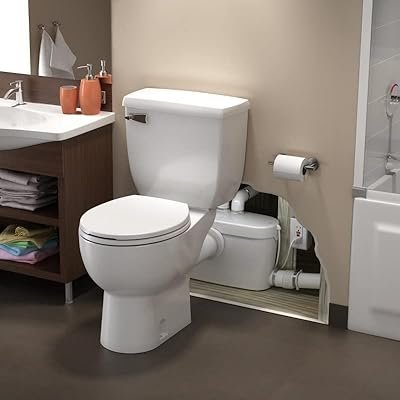
Traditional drainage modifications can require extensive demolition, floor excavation, and pipe relocation. Advanced wastewater pumping systems offer a more flexible alternative by allowing wastewater to be transported through compact pipework without major structural changes. For example, solutions such as the Saniaccess 2 can help simplify bathroom additions and renovation projects where direct gravity drainage is difficult to achieve.
Enabling Greater Design Flexibility
Modern construction increasingly focuses on creating adaptable spaces that can evolve with changing needs.
Restaurants may need additional kitchen facilities. Commercial offices may require new washrooms. Hotels may seek to add guest amenities in previously unused areas.
Solutions such as Macerators for Toilets, Macerators for Bathrooms, Shower & Basin Pumps, and Kitchen & Laundry Room Pumps help make these installations possible by removing many of the constraints associated with traditional gravity drainage systems.
This flexibility allows architects and developers to design spaces based on functionality rather than drainage limitations.
The Growing Importance of Wastewater Lifting Systems
As buildings become larger and more sophisticated, wastewater lifting systems are becoming an essential component of modern infrastructure.
In commercial, hospitality, healthcare, and mixed-use developments, wastewater often needs to travel significant distances or be lifted to higher elevations before reaching the main sewer network. High-capacity solutions such as the Sanicubic 1 VX are designed to support demanding wastewater applications where reliable lifting performance is essential for day-to-day operations.
These systems play a critical role in supporting the operational efficiency of modern buildings.
The Role of SFA India in Modern Wastewater Management
As construction projects become increasingly complex, SFA India continues to provide innovative solutions that address a wide range of wastewater challenges.
From Macerators for Toilets and Bathroom Macerators to Kitchen & Laundry Room Pumps, Shower & Basin Pumps, and advanced lifting stations, SFA solutions help overcome the limitations of gravity drainage while simplifying installation and reducing construction requirements.
For larger commercial and institutional applications, products such as the Sanicubic 2 GR provide dependable wastewater lifting capabilities where traditional drainage systems may not be practical.
These technologies enable greater flexibility in building design while helping property owners and developers optimize space utilization.
Building Smarter for the Future
As urban populations grow and construction projects become more ambitious, wastewater management systems must evolve to meet new demands.
While gravity drainage remains an important part of modern plumbing infrastructure, it is no longer the only solution available. Pumping technologies, lifting stations, and wastewater management systems are helping developers overcome site constraints, improve design flexibility, and make better use of available space.
By combining traditional drainage principles with innovative wastewater solutions, today’s construction projects can achieve greater efficiency, adaptability, and long-term performance.
The future of construction is not about replacing gravity drainage—it is about complementing it with technologies that enable buildings to meet the challenges of a rapidly changing world.